

MBA vs Work-Integrated MBA: Which is Better for Your Career?
Introduction
Choosing the right MBA program is one of the most important
decisions in your professional journey. With evolving industry demands,
students now have two major options: a Traditional MBA and a Work-Integrated
MBA.
Understanding the difference between these two can help you
make a smarter career choice.
What is a Traditional MBA?
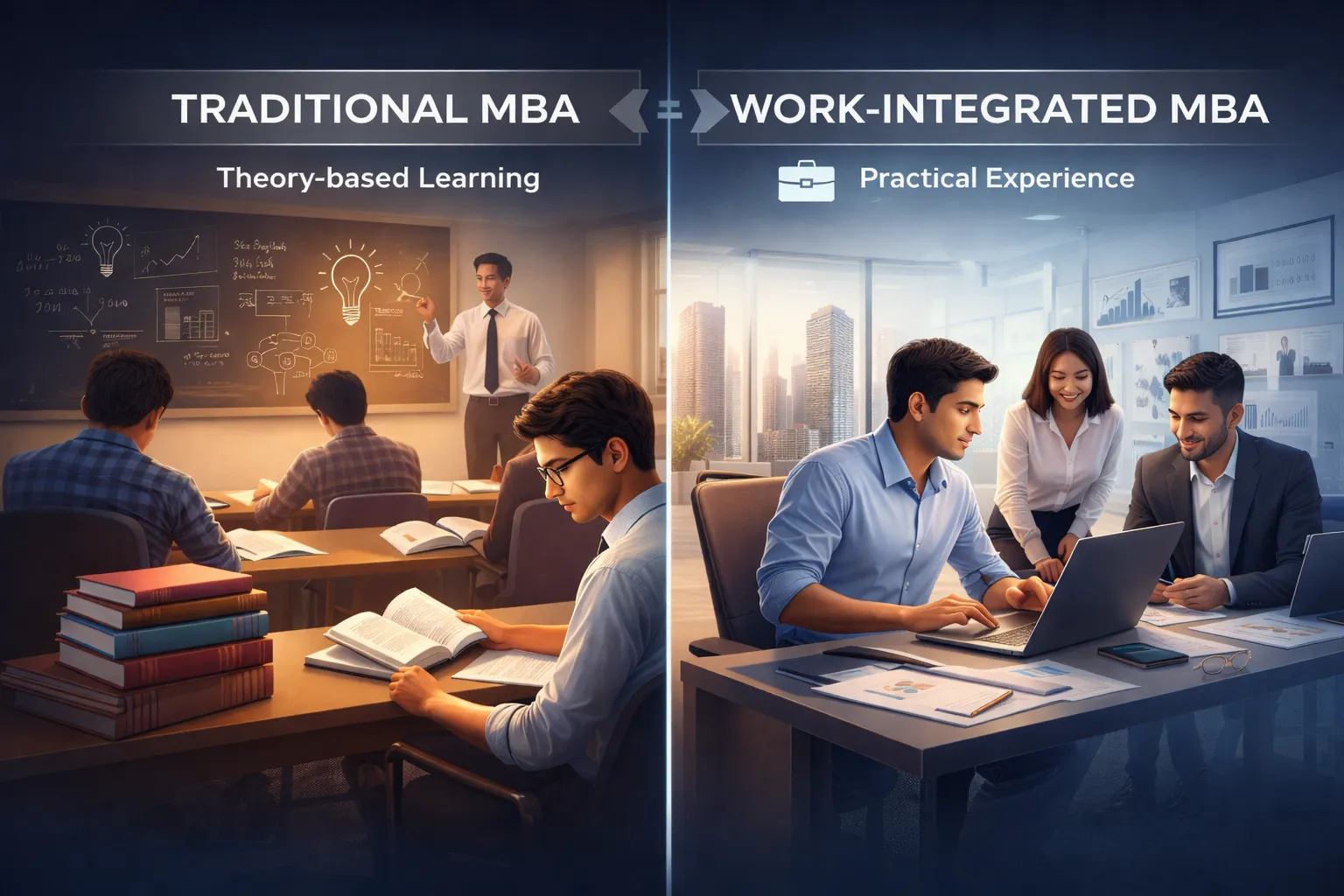
A traditional MBA focuses on classroom learning, case
studies, and theoretical concepts. It helps students understand business
principles but often lacks real-world exposure.
What is a Work-Integrated MBA?
A Work-Integrated MBA combines academic learning with real
job experience. Students work on live projects and gain industry exposure while
studying.
Key Differences
·
Learning Style
Traditional MBA is theory-based, while Work-Integrated MBA
is practical and experience-driven.
·
Work Experience
In a traditional MBA, students gain experience after
completing the course. In a Work-Integrated MBA, experience is gained during
the course.
·
Career Readiness
Work-Integrated MBA students are job-ready from day one.
Advantages of Work-Integrated MBA
1. Real-World Exposure
Students understand how businesses operate in real
scenarios.
2. Strong Resume
Graduates already have work experience, making them stand
out.
3. Skill Development
Focus on practical skills rather than just theoretical
knowledge.
Which One Should You Choose?
If your goal is to gain knowledge, a traditional MBA may
work.
But if your goal is to build a career with experience, a Work-Integrated
MBA is the better option.
Conclusion
The job market today values experience as much as education.
A Work-Integrated MBA gives you both, making it the smarter and future-ready
choice.